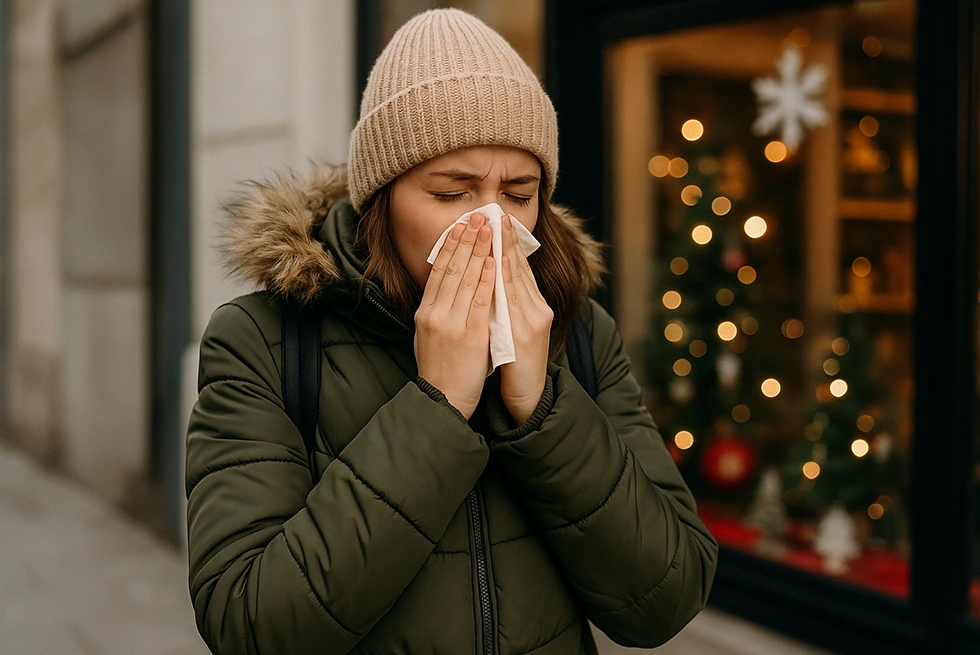
During the winter months, there is an increase in the typical symptoms of respiratory allergies, such as congestion, nasal obstruction, sneezing, and watery eyes—common in allergic rhinitis and asthma.
Cold temperatures, combined with humidity that promotes the growth of fungi, contribute to this rise. Additionally, tree pollen levels increase during winter, particularly from the Cupressaceae family. These factors lead to respiratory allergies commonly known as winter allergies.
Recommendations:
- Maintain a dry environment inside your home.
- Reduce indoor humidity levels as much as possible by using dehumidifiers.
- Air out the rooms daily.
-
Shower and change clothes when you arrive home.
-
Replace air-conditioning filters regularly.
-
Avoid walking through parks and areas with high pollen levels.
-
Avoid activities that may stir up pollen particles, such as mowing the lawn or sweeping terraces. If you are allergic to grass pollen, it is not advisable to lie on the grass.
-
Stay indoors as much as possible on days with high pollen concentrations, especially on windy days.
Bibliography:
1./ https://www.newtral.es/nivel-del-polen/20220517/
2./ https://www.fbbva.es/alergia/los-responsables-de-la-rinoconjuntivitis-y-el-asma-alergicas/alergia-por-polenes-que-son-y-como-evitarlos/
3./ https://pb-clinica-alergologia.com/alergologo-en-barcelona-sobrellevar-alergias-en-invierno/.